
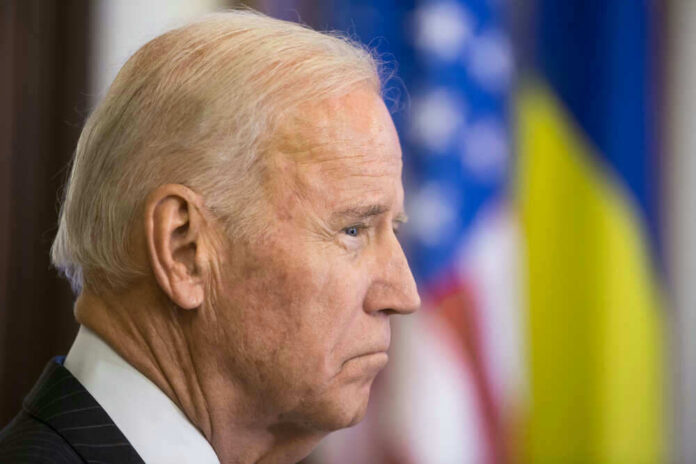
With a payout that pales next to his predecessors, Joe Biden’s memoir advance is a stark reminder of how far he has fallen in public esteem.
At a Glance
- Biden’s memoir sold for $10 million, well below Obama’s $65 million.
- The deal highlights a cooling market for political memoirs.
- Speculation about a potential $30 million deal with Jill Biden remains unfulfilled.
- The advance signals diminished market enthusiasm for Biden’s narrative.
A Humiliating Blow in the Memoir Market
Joe Biden’s memoir deal has sent shockwaves through the publishing world, as his advance from Hachette Book Group sits at a mere $10 million.
This is a far cry from the jaw-dropping $65 million that Barack and Michelle Obama fetched for their joint memoir deal.
Even Bill Clinton, back in 2004, secured a $15 million advance for “My Life.”
These figures don’t just represent money; they are a barometer of public interest and perceived historical significance. Biden, marked by intense polarization and a controversial withdrawal from the 2024 race, seems to have been left with far less market clout than his predecessors.
Biden suffers humiliating blow as memoir sells for paltry amount compared to Obama, Clinton https://t.co/U4UVSHIbix
— Daily Mail (@DailyMail) July 24, 2025
The market for political memoirs has cooled considerably. Once a guaranteed best-seller, books by political figures are struggling to find traction. The decline in demand can be attributed to a saturated market and a general fatigue with political nonfiction. Even President Donald Trump’s books have seen uneven success in this climate.
Biden’s previous memoir, “Promise Me, Dad,” was a bestseller, but times have changed. Readers seem less inclined to shell out for political narratives, regardless of the author’s stature.
Who Stands to Lose?
Biden himself is arguably the most affected by this turn of events. His memoir was an opportunity to solidify his legacy and present his own account of the events surrounding his presidency and subsequent withdrawal from the 2024 race.
The $10 million advance, while substantial, pales in comparison to the financial windfall he might have expected. Speculation abounds that a joint deal with his wife, Jill Biden, could have netted up to $30 million. However, with Jill opting out, that opportunity slipped away.
Hachette Book Group, the publisher of Biden’s memoir, faces its own challenges. While the prestige of publishing a presidential memoir is significant, the commercial risk is greater than in previous years.
The waning interest of the reading public in books by political figures means that marketing and distribution require a cautious approach. The Creative Artists Agency, which represents Biden, also faces the task of managing expectations and maximizing returns on an investment that hasn’t quite met expectations.
Market Trends and Historical Context
Presidential memoirs have historically been lucrative; however, market dynamics are shifting. Obama’s and Clinton’s memoirs set high expectations, but the current political landscape and market saturation have changed the game.
The memoir’s advance reflects these broader trends, with publishers now more risk-averse and advances tied tightly to realistic sales projections. The saturation of political narratives has led to a ‘glut’ and ‘fatigue’ in the market, with even high-profile releases struggling to meet past sales figures.
Historians and political analysts eagerly await the release of Biden’s memoir, anticipating insights into his health, decision-making, and the Democrat Party’s internal conflicts. However, the memoir’s advance and the market’s current state suggest that publishers and readers alike are recalibrating their expectations. The memoir could still shape Biden’s historical legacy, but its commercial success remains uncertain.
Implications for the Future
The impact of this memoir deal extends beyond Biden and Hachette. It sets a new benchmark for future presidential memoirs, potentially lowering expectations for successors.
The publishing industry, already grappling with declining sales for political nonfiction, must consider more diverse projects to captivate readers. This shift could lead to a broader range of nonfiction topics gaining prominence as publishers seek alternatives to political narratives.
The reception of Biden’s memoir will further influence public perceptions of his presidency and the Democrat Party’s dynamics. Political historians and analysts will scrutinize its content for any revelations that could alter the narrative of Biden’s presidency.
Ultimately, the memoir’s advance and reception will reflect the evolving landscape of political memoirs and the public’s appetite for such narratives.