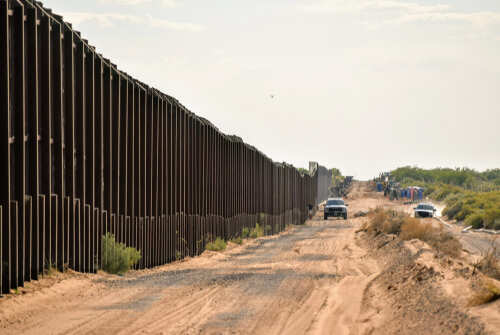
A federal judge froze Big Bend border-barrier work because the government’s legal shortcut is now the issue, not the steel.
Story Snapshot
- A federal court paused construction across Texas’ Big Bend Sector pending a full hearing.
- The Department of Homeland Security used waiver authority to skip many environmental and cultural laws.
- Customs and Border Protection says the project is lawful and part of broader border security plans.
- Opponents argue Big Bend does not meet the statute’s “high illegal entry” trigger for waivers.
What the Judge Stopped and Why It Matters
A federal judge issued a temporary injunction that halted border-barrier construction and ground disturbance in the Big Bend Sector of Texas while the case proceeds. The order followed lawsuits led by the Center for Biological Diversity and local plaintiffs who say the Department of Homeland Security exceeded its legal powers. The court’s pause does not decide the final outcome. It signals that the legal questions over waiver use and site selection deserve full review before bulldozers return.
Customs and Border Protection maintained it acted under clear legal authority and said the plan ties to border security needs for the sector. The agency described a package of barriers, roads, lighting, cameras, and sensors, not just a line of steel. Officials also claimed they aimed to protect the landscape while improving security. That message targets a core concern in Big Bend: show toughness on illegal crossings without scarring a world-class desert and river corridor.
The Fast-Track Waiver at the Center of the Fight
The Department of Homeland Security issued waivers that set aside dozens of environmental, public health, cultural, and historic-preservation laws to speed construction between Big Bend and Lake Amistad, effective late July. Congress created this waiver tool years ago for border barriers, and courts have upheld it in other regions. The present dispute narrows to whether Big Bend legally qualifies for waiver use and whether the agency grounded that call in evidence, not slogans.
Plaintiffs argue Big Bend lacks the “high illegal entry” condition that would justify the waiver in this location. They also warn that barriers, new roads, and staging areas could harm park-adjacent lands, iconic river corridors, and sacred or historic sites. Local entities raised flooding risks if levees are altered without proper engineering review and coordination. These are concrete site-based claims that a judge can weigh with maps, hydrology, and on-the-ground surveys.
Security Case Meets a Rugged Map
Department officials framed Big Bend as part of a larger security zone that needs layered tools, including barriers and sensors. The legal team points to a funded execution plan and active planning stages, not a one-off project made on the fly. Critics counter that public reporting shows low migrant activity in the sector and little proof that a wall would change outcomes in this harsh terrain. They cite sector figures suggesting minimal crossings compared with other areas.
Judge temporarily blocks Trump’s border wall in Big Bend region of Texas, citing likelihood of ‘irreparable harm’ and ‘public interest’ https://t.co/vXvYmD7L7Z
— Arnaud Mercier – #Entrepreneur #Versailles (@arnaudmercier) October 4, 2026
Conservative common sense asks two simple questions. First, does the law allow a waiver here? Second, will this exact segment deliver clear gains that justify the cost and impact? If the Department of Homeland Security can show documented routes, interdiction gaps, and response-time gains, the case strengthens. If the record shows sparse traffic and steep canyons, sensors, roads, and targeted patrols may beat steel on both impact and value.
What Comes Next in Court and on the Ground
The court will test the waiver’s statutory hook, the quality of the Department of Homeland Security’s evidence, and whether agencies coordinated on levee and flood issues as required. Expect the plaintiffs to spotlight archaeology, tribal access, and tourism impacts with named experts and local affidavits. Expect the government to emphasize Congress’s broad delegation, prior case law upholding waivers, and a security package bigger than any one wall panel.
Practical resolution likely lands in a narrower scope with more technology, improved roads, and fewer permanent barriers—unless the government brings hard, site-specific data that Big Bend is a persistent breach point. That outcome would protect taxpayer dollars, respect the land, and still back the Border Patrol with tools that work in this terrain. The injunction forced a needed step: prove the case mile by mile, not by press release.
Sources:
nbcnews.com, npr.org, time.com, apnews.com, texastribune.org, bigbendsentinel.com, thetexan.news, dallasexpress.com, pbs.org