

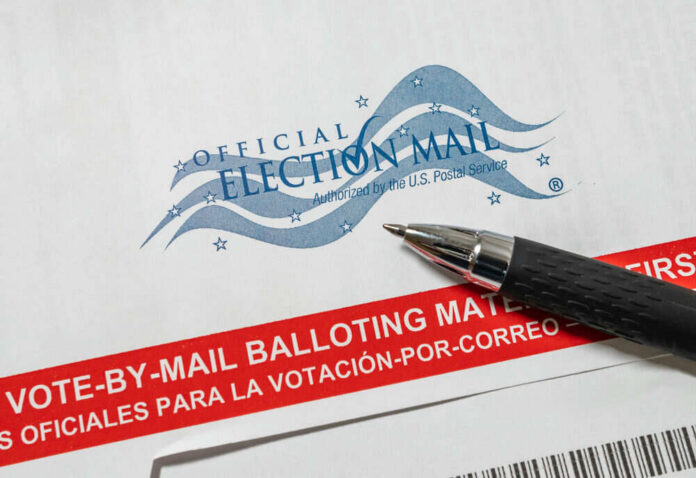
President Trump’s executive order to build a national list of verified voters promises to slam the door on mail-in ballot fraud, but Democrat-led states are already rushing to sue and protect their systems.
Story Snapshot
- Trump signs an order on April 1, 2026, directing DHS and SSA to create state-by-state lists of eligible voters to secure mail-in voting.
- USPS ordered to restrict ballots to verified voters only, addressing long-standing concerns over cheating in mail-in systems.
- Oregon and Arizona officials threaten immediate lawsuits, claiming federal overreach into state election authority.
- The move energizes conservatives frustrated with unproven 2020 fraud claims while facing partisan backlash from mail-in reliant states.
Executive Order Targets Mail-In Vulnerabilities
President Donald Trump signed the executive order at the White House on the morning of April 1, 2026. The directive tasks the Department of Homeland Security, in coordination with the Social Security Administration, with compiling nationwide lists of verified eligible voters for each state.
This step aims to ensure mail-in ballots reach only legitimate citizens. Trump highlighted “legendary” cheating in mail-in voting as the justification, echoing conservative demands for election security after years of disputed 2020 outcomes.
The order mandates secure envelopes with unique barcodes for tracking ballots.
Swift Backlash from Blue States
Oregon Secretary of State Tobias Reed and top Arizona elections officials announced plans to file lawsuits within minutes of the signing. Reed labeled the order politically motivated, vowing to defend state control over elections.
These states, with heavy reliance on universal mail-in systems like Oregon’s since 1998, view the federal intervention as an unconstitutional power grab.
Local reactions in mail-in-heavy Pacific Northwest states underscore tensions ahead of midterms. Trump anticipates challenges from what he calls “rogue judges,” standing firm on voter integrity needs.
Trump signs order directing creation of a national voter list, a move sure to face legal challenges | Click on the image to read the full story https://t.co/cAZUWUyRkz
— WBAL-TV 11 Baltimore (@wbaltv11) April 1, 2026
Federal Agencies Mobilize for Implementation
The US Postal Service faces directives to prevent ballots from reaching non-eligible individuals, a practical measure to curb potential fraud.
DHS and SSA must deliver updated lists 60 days before federal elections, with the Attorney General prioritizing investigations into improper ballot distributions.
Non-compliant states risk losing federal funding. This builds on Trump’s prior efforts, including proof-of-citizenship requirements, despite courts blocking similar actions. Conservatives see this as essential common-sense reform to restore trust in elections run too loosely by states.
Stakeholders clash over motivations: Trump pushes integrity against perceived fraud, while opponents prioritize access. Power dynamics pit federal executive authority against state primacy under Article I, Section 4 of the Constitution. Implementation hangs on legal outcomes, with no lawsuits filed as of the evening of April 1.
Implications for Election Integrity and Midterms
Short-term court injunctions could halt progress, disrupting mail-in voting in states and affecting elderly or rural voters. In the long term, success might establish federal databases that strengthen security; failure reinforces state control.
Politically, it rallies Trump’s base, weary of globalist overspending and open borders, but alienates opponents fearing suppression.
Limited data on agency feasibility exists, yet the order addresses real frustrations with unverified voting amid inflation and immigration woes. Conservatives urge courts to prioritize liberty and fair elections over leftist resistance.