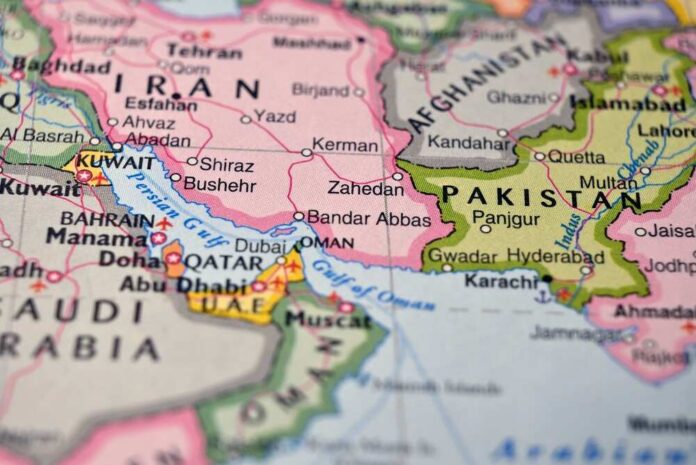
The war with Iran just took a sharp turn toward possible ground action, and the arrival of 3,500 Marines and sailors has many voters asking how “no new wars” became another Middle East escalation.
Quick Take
- About 3,500 U.S. sailors and Marines with the 31st Marine Expeditionary Unit arrived in the CENTCOM region aboard the USS Tripoli on March 27, 2026.
- The deployment adds amphibious assault capability—different from earlier air and carrier-heavy moves—and signals readiness for wider operations if ordered.
- The Pentagon is also weighing sending 3,000–4,000 additional troops from the 82nd Airborne, but no decision to send them into Iran has been confirmed.
- Iran’s attacks, including a strike on a Saudi base that injured 24 U.S. troops, are intensifying as the Strait of Hormuz disruption keeps energy markets on edge.
USS Tripoli Arrival Signals a New Phase of Readiness
U.S. Central Command confirmed that the USS Tripoli (LHA-7) entered its Middle East area of operations on March 27 with roughly 3,500 sailors and Marines from the 31st Marine Expeditionary Unit.
Unlike a carrier strike group built mainly for sustained air operations, an amphibious assault ship is designed to put forces ashore and support them with aircraft. That capability shift is why the deployment is being read as more than routine reinforcement.
U.S. Sailors and Marines aboard USS Tripoli (LHA 7) arrived in the U.S. Central Command area of responsibility, March 27. The America-class amphibious assault ship serves as the flagship for the Tripoli Amphibious Ready Group / 31st Marine Expeditionary Unit composed of about… pic.twitter.com/JFWiPBbkd2
— U.S. Central Command (@CENTCOM) March 28, 2026
Reporting around the deployment connected the timing to the war’s first full month and to Iran’s escalating attacks on U.S. partners and positions in the region. The most serious breach described in recent coverage was an Iranian strike on a Saudi base that injured 24 U.S. troops.
For American families watching another conflict widen, those injuries underline how quickly “limited” strikes can become an open-ended commitment once U.S. personnel are targeted.
Airstrikes Continue While Diplomacy Claims Collide
President Trump has publicly pointed to “productive talks” and has delayed certain planned strikes, including attacks on power plants, even as U.S. air operations continue. Iran, according to the same reporting, denies direct negotiations.
That mismatch matters because Americans are being asked to accept a growing military footprint without clear agreement on the war’s end state. Without verified progress at the negotiating table, the public is left reading tea leaves from troop movements and target lists.
U.S. officials say strikes have hit more than 9,000 Iranian targets, including missile launchers, naval capabilities, and parts of Iran’s defense industry. Iran has responded with drones and missiles against Israel and others, while disruption around the Strait of Hormuz adds economic pressure far from the battlefield.
With roughly 20% of global oil moving through Hormuz, any prolonged blockage or instability translates quickly into higher energy costs—exactly the kind of “kitchen table” fallout that fractures political coalitions at home.
The 82nd Airborne Option Raises the Stakes—Even Without an Invasion
Pentagon planning reported in late March focused on potentially deploying 3,000 to 4,000 soldiers from the 82nd Airborne Division as additional reinforcement. Sources differ slightly on the size, and officials have not confirmed an order to send them into Iran.
Still, the 82nd is built for fast deployment and seizure missions, and reporting has tied the discussion to contingency options around chokepoints and shoreline objectives. That planning alone signals preparation for scenarios beyond airstrikes.
The administration also faces the political reality that many Trump voters supported him because he criticized past interventionism and promised to avoid new regime-change wars. The available reporting does not confirm a decision for a ground invasion, but it does show posture changes that expand what is possible on short notice.
For constitutional conservatives, the next key test is whether the White House and Congress clearly define objectives, limits, and legal authorities before momentum substitutes for consent.
Why MAGA Voters Are Divided: Israel, Energy, and “Forever War” Fatigue
Trump’s coalition is split in a way Washington often underestimates: many voters can oppose Iran’s regime and still reject another sprawling Middle East war. The war began after U.S.-Israel joint strikes in late February, and Israel remains a central factor as Iran targets it with missiles and drones.
Some voters see strong alignment as necessary deterrence; others fear the U.S. is being pulled into a broader regional conflict with unclear boundaries and predictable blowback.
More than 3,500 U.S. Troops arrive in Middle East as Iran war strikes intensify https://t.co/7hh4ooPMeY
— CBS News (@CBSNews) March 29, 2026
With about 50,000 U.S. troops already in the region before the latest moves, the question becomes not only military capability but mission discipline. The reporting available emphasizes readiness and options—carriers, fighters, amphibious forces, and possible airborne reinforcements—while diplomacy remains contested and outcomes uncertain.
For Americans already fed up with inflation and high energy costs, a widening conflict that threatens oil flows can feel like paying twice: once in taxes and again at the pump.
Sources:
Fox News video segment on U.S. troops deployment amid Iran war
2026 United States military buildup in the Middle East
Pentagon weighs deploying more troops to the Middle East
US expected to send thousands of soldiers to Middle East, sources say