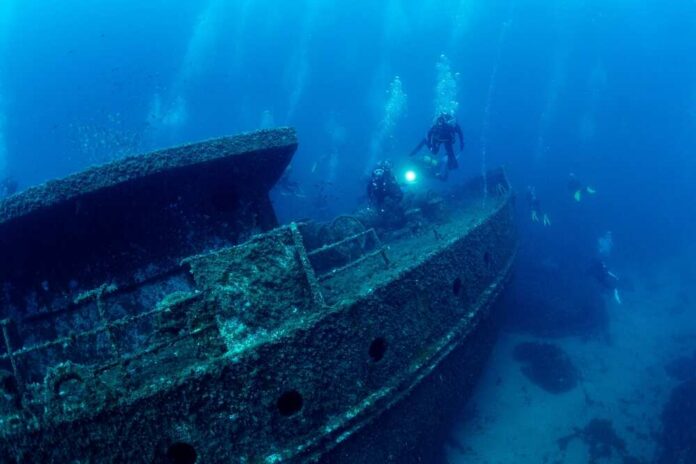
A 17th-century Swedish warship, deliberately buried underwater for 400 years to build a bridge foundation, has surfaced in Stockholm’s waters due to record-low Baltic Sea levels—offering archaeologists a fleeting window to uncover a forgotten chapter of Sweden’s naval dominance before nature reclaims it.
Story Snapshot
- 17th-century Swedish Navy warship surfaces near Stockholm after 400 years underwater, exposed by the Baltic Sea’s lowest water levels in a century
- The ship was deliberately sunk around 1640 to serve as a bridge foundation when Queen Christina ordered the naval shipyard relocated
- Exceptional preservation due to the absence of wood-eating shipworms in Baltic waters provides a rare insight into 17th-century naval engineering
- Archaeologists are racing against time to document the wreck before water levels rise again, with artifacts including cannonballs and pottery already recovered
Forgotten Naval Legacy Emerges from the Deep
The oak hull of a Swedish Navy warship has broken the surface near Kastellholmen island in central Stockholm, visible for the first time in approximately 100 years.
Marine archaeologist Jim Hansson from Vrak – Museum of Wrecks describes the find as “the heart of the Swedish Navy,” representing tangible evidence of Sweden’s 17th-century maritime power.
The vessel is one of five warships deliberately sunk to form bridge foundations when the Swedish Navy relocated its shipyard in the 1630s-1640s, following Queen Christina’s reported displeasure with the view from her castle. This practical engineering solution repurposed decommissioned oak hulls rather than felling new timber for construction.
Exceptional Preservation Reveals Engineering Secrets
The Baltic Sea’s unique environment has kept the wooden warship remarkably intact for four centuries. Hansson explains that shipworms—organisms that typically destroy wooden vessels in marine environments—do not exist in the Baltic, allowing the oak structure to survive largely unscathed.
The wreck’s skeleton is now clearly visible above water, enabling detailed examination of hull construction techniques, materials, and design elements from Sweden’s naval golden age.
Researchers have already recovered artifacts confirming the vessel’s military purpose, including cannonballs, pottery, and ropes. This preservation quality mirrors that of the famous Vasa warship, which sank on its maiden voyage and now stands displayed in Stockholm after salvage operations in the 1960s.
Time-Sensitive Research Window Opens
The current exposure creates an urgent opportunity for archaeologists working under “The Lost Navy” research program. Record-low water levels—the lowest observed in a century—grant unprecedented access to study and document the wreck before the Baltic inevitably rises again.
Parts of the same wreck briefly surfaced in 2013 but were not extensively examined. Researchers have not yet definitively identified which specific vessel this represents, as five similar ships from the late 16th and early 17th centuries form the bridge foundation line.
The team is racing to collect photographic documentation, structural measurements, and additional artifacts that could help identify the exact warship and provide insights into Swedish naval construction methods during the height of the nation’s maritime dominance.
Naval shipwreck emerges in Sweden after being buried underwater for 400 years https://t.co/SoBeXVMp6a
— CBS Mornings (@CBSMornings) February 18, 2026
This discovery fits within a broader pattern of Swedish maritime archaeological finds revealing Baltic treasures. Recent years have yielded centuries-old weapons chests and armor from ancient wrecks, champagne and wine hauls from sunken vessels, and even the sister ship of the iconic Vasa.
Each find reinforces Sweden’s rich naval heritage while demonstrating how environmental changes can unlock previously inaccessible historical resources.
The wreck serves as a monument to innovative problem-solving by Swedish naval engineers who transformed obsolete warships into functional infrastructure rather than simply discarding them.
As water levels fluctuate with environmental conditions, this forgotten piece of Swedish history reminds us that the past remains just beneath the surface, waiting for the right moment to reemerge and tell its story to those willing to listen and learn.
Sources:
Navy shipwreck emerges in Baltic Sea, Sweden – CBS News
Record-low water levels reveal 17th-century shipwreck in Stockholm – RTL Today
17th century shipwreck emerges in Stockholm due to low sea levels – The Sun